
Types of Durian in Malaysia: Guide to the Best Varieties
Durian is the king of fruits here in Malaysia, and honestly, the variety is wild. You’ll spot all sorts—different shapes, flavors, and textures everywhere you go.
Malaysia has about 20 well-known durian types, and each one brings something different to the table. Some are sweet and creamy, others have a hint of bitterness, and a few even taste a little alcoholic.
That means, no matter what you’re into, there’s a durian out there you’ll probably love.
You’ve probably heard of Musang King—it’s famous for a reason. But Malaysia has plenty of other gems like Black Thorn, Red Prawn, and Golden Phoenix.
Each type comes from a different region, so if you’re willing to branch out, you’ll discover even more flavors. Knowing the varieties really helps you zero in on the one that suits your taste.
When you understand the differences, hunting for durian gets a lot more fun. Whether you want buttery flesh, a powerful aroma, or just a gentle sweetness, you’ll find something in Malaysia’s durian scene that hits the spot.
Popular Types of Durian in Malaysia
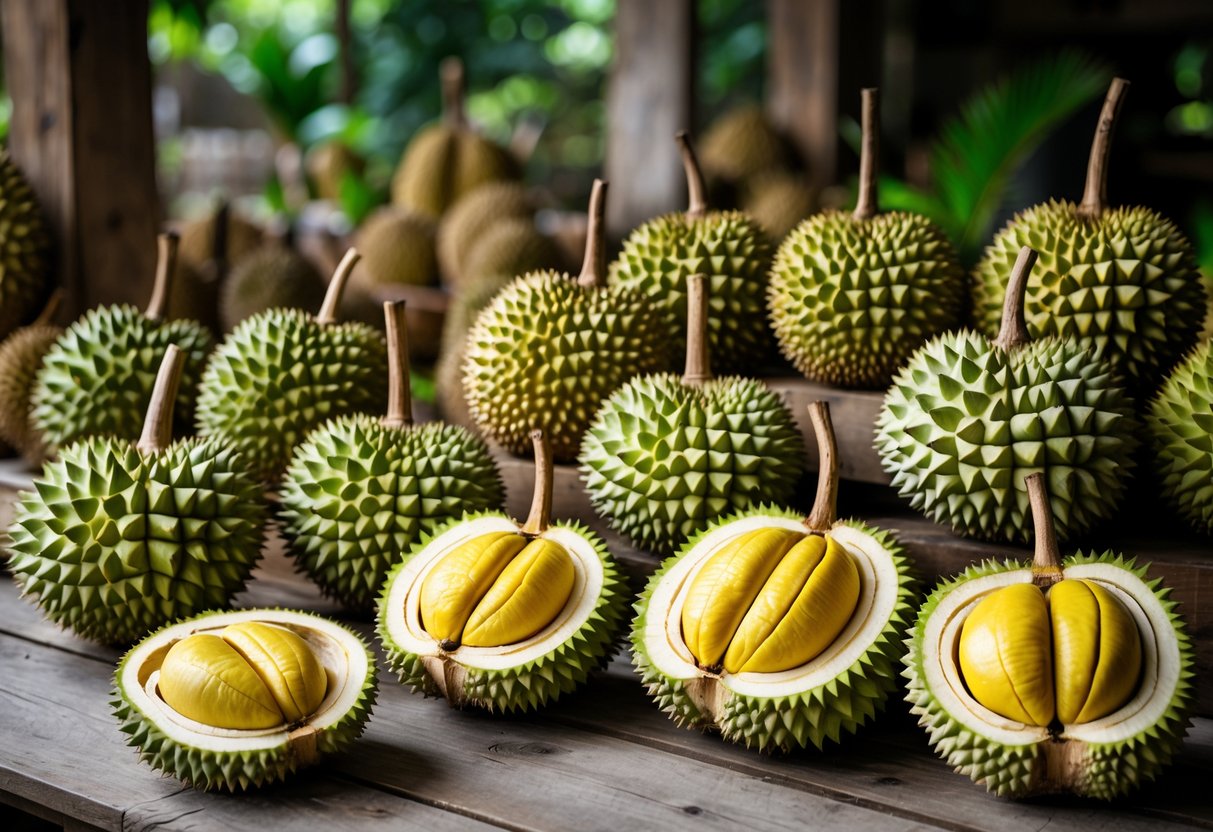
Malaysia’s durian selection is honestly impressive. Each type has its own flavor and texture—some are super creamy and sweet, while others are bold and a bit bitter.
Some people chase the strongest aroma, while others go for a more balanced bite.
Musang King Durian
Musang King (locals call it Mao Shan Wang) is hands-down the most famous durian here. The flesh is thick, bright yellow, and buttery-soft.
When you taste it, you’ll get a mix of sweet and bitter. It’s rich, creamy, and the flavor lingers.
People—locals and tourists alike—love this durian. The strong smell matches the bold taste, which is why you see it in desserts like ice cream and pastries.
If you’re trying to spot Musang King, look for a dark green shell with sharp, pyramid-shaped thorns.
Black Thorn Durian
Black Thorn durian grabs your attention with its deep orange, soft flesh. The texture is smooth, almost like marshmallow, and it just melts away.
You’ll taste both bitter and sweet, with a custardy richness that’s hard to forget.
It’s not easy to find and usually costs more. But if you come across one, you really should try it—the taste is pretty special.
The shell looks darker, and the fruit gives off a strong smell when it’s ripe.
D24 Durian
D24 used to be the big star before Musang King took over. The flesh is pale yellow, firm, and a bit robust.
You’ll notice mostly bitterness, with some sweetness and a slight alcoholic kick.
It’s a good pick for beginners since it’s not as intense as some other varieties. The bitterness stands out but doesn’t overwhelm.
Sometimes the flesh feels a bit dry, but it still packs a punch. You can spot a D24 by its shell with broad, blunt spines.
Red Prawn Durian
Red Prawn durian is all about sweetness and its reddish-orange flesh. The texture is creamy, though sometimes it gets a little watery.
Unlike Musang King or Black Thorn, there’s no bitterness here, so if you love sweet fruits, this one’s for you.
You’ll mostly find Red Prawn in Johor and Pahang. The smell’s milder than most, so it’s great if you want a dessert-like durian without a strong aftertaste.
Other Noteworthy Varieties
Malaysia doesn’t stop at the big names. There are plenty of other durians that deserve a mention:
- Tekka: Moist, bitter, and pale yellow. Pretty rare, and people appreciate its consistent texture.
- XO: Tastes strongly alcoholic (thanks to fermentation), with soft and watery flesh.
- Golden Phoenix: Packs a strong smell, not as creamy, but usually more affordable.
- D101: Offers a nice balance of bitterness and sweetness, with firm, fibrous flesh.
- Tupai King: Sweet, rich, and slightly fibrous—it’s getting more popular these days.
Each type brings something different, so you might want to try a few to see which one wins you over.
Choosing and Enjoying Malaysian Durian
You’ll find all sorts of flavors and textures in Malaysian durians, and honestly, each one can surprise you. If you know what to expect, it’s way easier to pick the right one for your tastes.
A couple of simple tricks can help you choose a ripe durian that tastes just right.
Taste and Texture Differences
Malaysian durians swing from super sweet and creamy to a little bitter or even lightly alcoholic. Take the Musang King (D197)—it’s famous for its rich, bittersweet taste and thick, creamy flesh.
Then there’s the D24 XO, which gives you sweetness with a boozy twist, perfect if you like deeper, more complex aromas.
Texture makes a big difference, too. Some, like the D28 Creamy Bun, are thick and velvety. Others, like the D175 Red Prawn, are softer and basically melt in your mouth.
Even the color changes—pale yellow, golden, sometimes reddish—and that usually hints at the flavor.
Tips for Selecting the Best Durian
Picking out a good durian isn’t too hard if you know what to look for. First, give the durian a gentle shake; if it’s ripe, you’ll hear the seeds moving around inside.
Check the spikes—they should look greenish with brown tips. That usually means the fruit is at its best.
Take a sniff next. A strong but pleasant scent means it’s ready. If the smell is way too strong or sour, skip it—probably overripe or going bad.
And don’t forget to check the weight. Ripe durians often feel lighter because the flesh inside is creamy and not watery anymore.
Durian Enthusiasts and Popularity
Durian lovers—some call them true enthusiasts—are always on the lookout for rare, prized varieties like Black Thorn (D200) or Golden Phoenix (D198).
People rave about these types for their complex flavors. They strike this tricky balance between sweetness and just a hint of bitterness. Maybe that’s why seasoned tasters seem to love them so much.
You’ll see Musang King and D24 everywhere. These popular varieties fill up markets because they deliver a reliable taste and texture.
Honestly, trying different types is half the fun. You’ll probably stumble on a favorite of your own and get a better feel for just how diverse Malaysian durian culture really is.
Editor’s notes
Growth is good, but staying personal matters more. We don’t want to lose the ability to care. As long as we can recognise our customers as people — not numbers — we’re on the right path.