
Malaysian Durian Types: Guide to Famous Varieties & Key Facts
If you’re looking to dive into Malaysian durian, you should know there’s a whole world beyond just Musang King.
Malaysia actually has about 20 popular durian types, each with its own flavor, texture, and look.
Getting to know these differences really helps you find the durian that matches your taste.
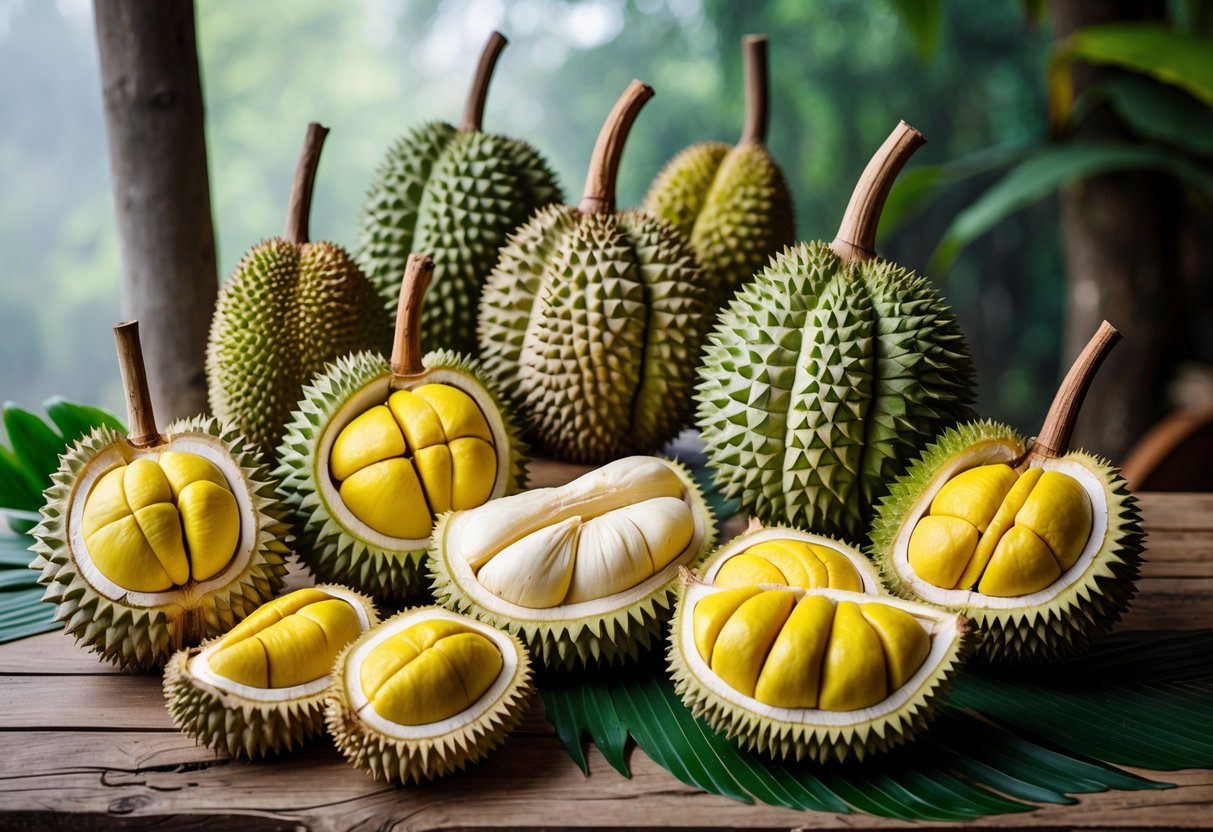
Some varieties are sweet and creamy, while others lean more bitter or have a complex flavor.
A few even show off rare colors like red or gold flesh.
If you like your durian mild, you’ll find options.
If you want it strong and punchy, Malaysia’s tropical climate grows those too.
When you learn about what makes each type unique—shape, color, taste—you start to appreciate the whole scene a bit more.
It honestly makes eating durian more fun when you know how to pick the one that’s right for you.
Overview of Popular Malaysian Durian Types
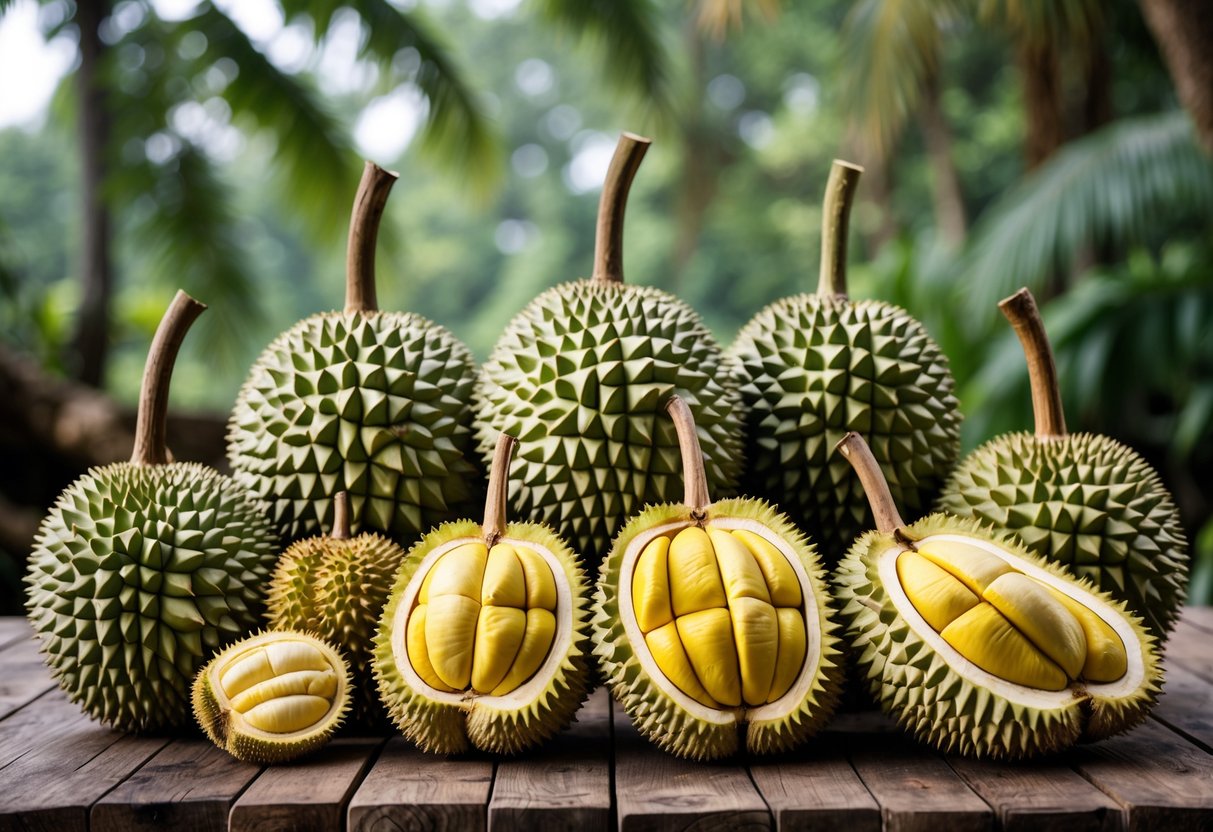
Malaysian durians come in all sorts of flavors, textures, and smells, and there’s something for just about everyone.
Some are famous for their rich taste and creamy flesh.
Others are rare or have some quirky features that make them stand out.
You’ll spot everything from classic favorites to those premium, hard-to-find durians that people rave about.
Musang King (D197): The Flagship Variety
Musang King (or Mao Shan Wang) is probably the most famous durian you’ll find in Malaysia.
People love it for its thick, creamy, bright golden-yellow flesh.
When you take a bite, you get that rich, bittersweet kick and a smell that’s kind of turmeric-like—hard to forget, honestly.
Farmers mainly grow it in Kelantan, Pahang, and Johor.
You’ll notice its short, sharp spikes and a brownish-green color on the outside.
Inside, the seeds are small and flat, so you get more of that prized flesh.
Musang King usually costs more since everyone wants it, and it’s seen as a top-tier durian.
D24 and XO: Classic Durian Favorites
D24 is a classic that’s everywhere in Malaysia.
It shows off deep yellow to pale cream flesh and has a smooth, velvety feel.
The flavor is sweet, with just a hint of alcohol, which a lot of people seem to love.
XO is sort of a stronger version of D24, with a more pronounced alcoholic taste.
Fans of traditional durian often pick these.
Both have medium-sized, dense spikes and tend to be round or oval.
They strike a solid balance between sweet and bitter, which makes them pretty easy to recommend.
Black Thorn (D200): Premium and Rare
Black Thorn stands out as a rare, sought-after durian with an oval shape and big, sharp spikes.
You’ll mostly find it in Penang.
The flesh is a deep, buttery yellow—soft and creamy, with a sweet taste that lingers and finishes with a little bitterness.
Because Black Thorn is so hard to get, it’s exclusive and pricey.
The seeds are small, so you get more fruit for your effort.
If you’re after something luxurious and complex, Black Thorn is a fantastic pick.
Red Prawn (D175) and Golden Phoenix (D198)
Red Prawn is famous for its reddish-pink flesh that just melts in your mouth.
It’s soft, creamy, and super sweet, with a touch of bitterness at the end.
This one mainly comes from Penang and gets a lot of love for its color and flavor.
Golden Phoenix (or Jin Feng), on the other hand, grows in Johor.
It sports bright golden skin and smooth, velvety flesh.
The taste is sweet, but there’s a mild, almost fermented note that gives it some extra character.
Both Red Prawn and Golden Phoenix are considered premium durians.
Their unique looks and standout flavors make them big favorites among durian fans.
| Durian Type | Origin | Flesh Color | Texture | Taste Profile | Notable Feature |
|---|---|---|---|---|---|
| Musang King | Kelantan, Pahang, Johor | Deep golden-yellow | Thick, creamy | Rich, bittersweet, turmeric aroma | Small flat seeds, premium |
| D24/XO | Malaysia | Deep yellow to pale cream | Velvety smooth | Sweet with alcoholic notes | Medium spikes, classic |
| Black Thorn | Penang | Deep buttery yellow | Soft, creamy | Sweet with bitter undertone | Rare, sharp spikes |
| Red Prawn | Penang | Reddish-pink | Soft, tender | Intense sweet, slight bitter | Unique color |
| Golden Phoenix | Johor | Bright golden | Velvety smooth | Sweet with fermented note | Distinctive aroma |
Understanding Durian Registration, Seasonality, and Selection
Malaysia has a pretty official system to help you spot different durian types.
There’s also a clear fruiting season, and a few easy tricks for picking out good fruit.
Knowing this stuff makes it way easier to find the durian you’ll actually enjoy.
Malaysian Department of Agriculture’s D-Number System
The Department of Agriculture in Malaysia gives each registered durian variety a D-number.
Every clone gets a unique number, like D197 for Musang King or D200 for Black Thorn.
This system keeps things standardized for buyers and sellers.
So, if you buy a durian labeled “Musang King,” you know it’s the real deal.
There are more than 200 registered types, but you’ll see about 15 to 20 at the markets.
If you spot a durian without a D-number, it’s probably a durian kampung (wild or village-grown), which can be a bit of a gamble when it comes to taste.
Durian Season and Top Locations
Malaysia’s main durian season hits from June to August, especially in Pahang, Kelantan, and Johor.
That’s when you’ll find the best selection and prices.
There’s a shorter season from December to February in some other regions.
If you plan your trip around these months, you’ll have a better shot at tasting durian at its freshest.
Some of the best places to try durian include Balik Pulau in Penang for variety, Raub and Bentong in Pahang for top Musang King, and Tangkak in Johor.
These spots are famous for their orchards and each brings something different to the table.
How to Select Quality Durian Fruit
When you’re picking out a durian, keep an eye on a few things.
- Stem: Go for one with a thick, firm stem. If the stem looks dried out or shriveled, the fruit’s probably past its prime.
- Shake Test: Gently shake the durian. If you hear a dull thud, chances are the flesh inside is soft and ripe.
- Smell: Stick your nose close—ripe durians give off a strong, sweet, and just a bit pungent aroma. If there’s no smell or it’s sour, it’s likely not at its best.
- Appearance: Check the thorns. They should feel firm and sharp. Also, oddly enough, a slightly irregular shape is a good sign; a perfectly round durian can actually be suspicious.
Try these quick checks next time you’re at the market. With a little practice, you’ll spot the good ones in no time.
Editor’s notes
Even after all this time, we’re still learning. Fruits change. People change. Expectations change. Staying curious keeps us relevant.