
Durian Types: A Guide to Popular Varieties and Key Differences
Durian, often called the king of fruits, comes in all sorts of types, each with its own flavor, texture, and aroma. If you’re curious about what sets them apart, knowing these differences can make picking the right durian a lot easier.
You’ll find popular durian varieties with qualities that range from creamy and bittersweet to sweet and mild.
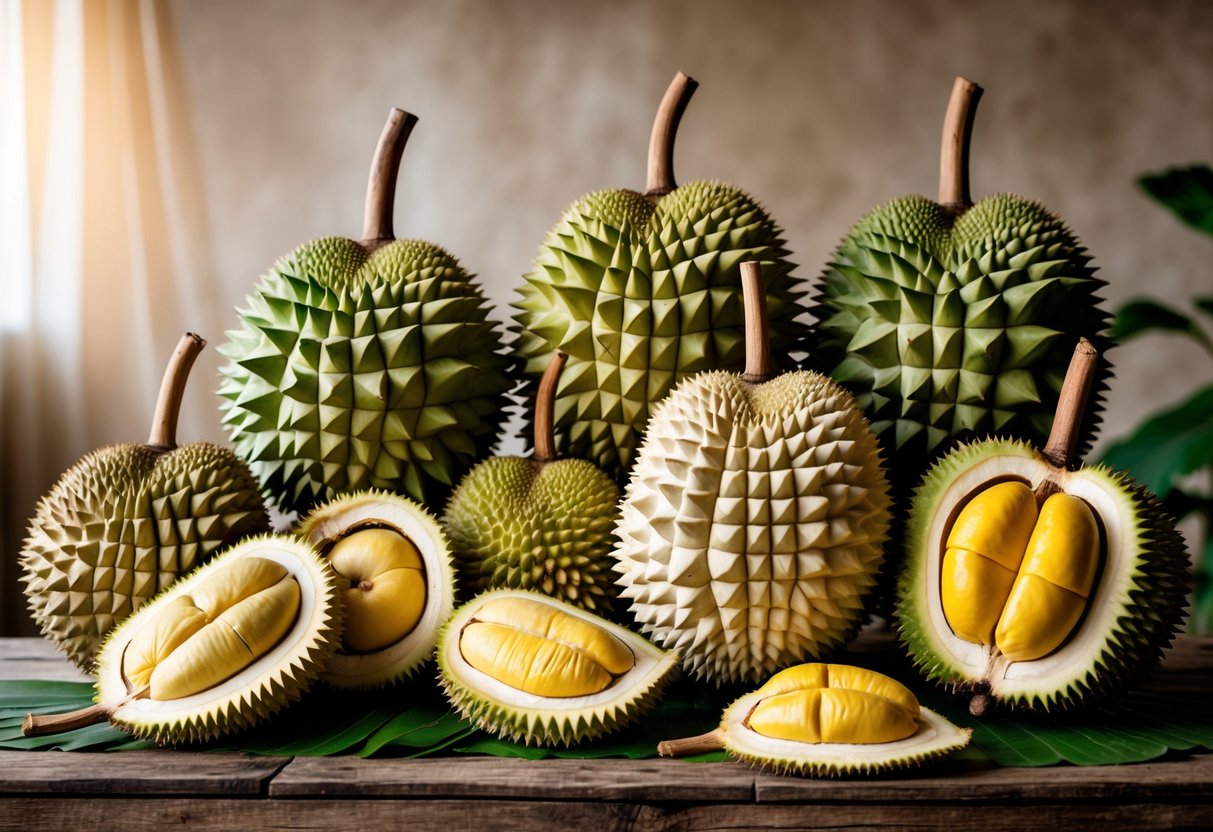
Some types, like Mao Shan Wang, boast a rich, creamy texture and bittersweet taste. Others, like Red Prawn, lean sweeter and feel almost like custard.
Depending on what you like, you might go for a durian with a strong, sharp smell—or maybe you’d rather something milder and friendlier. Knowing your types really helps you get the most out of the durian experience.
People in Southeast Asia have loved durians for ages, and each variety has a story that connects it to places like Malaysia or Thailand. When you dig into the main types, you start to see why this fruit is so beloved—and, well, sometimes hotly debated for its powerful scent and taste.
Popular Durian Varieties and Their Characteristics
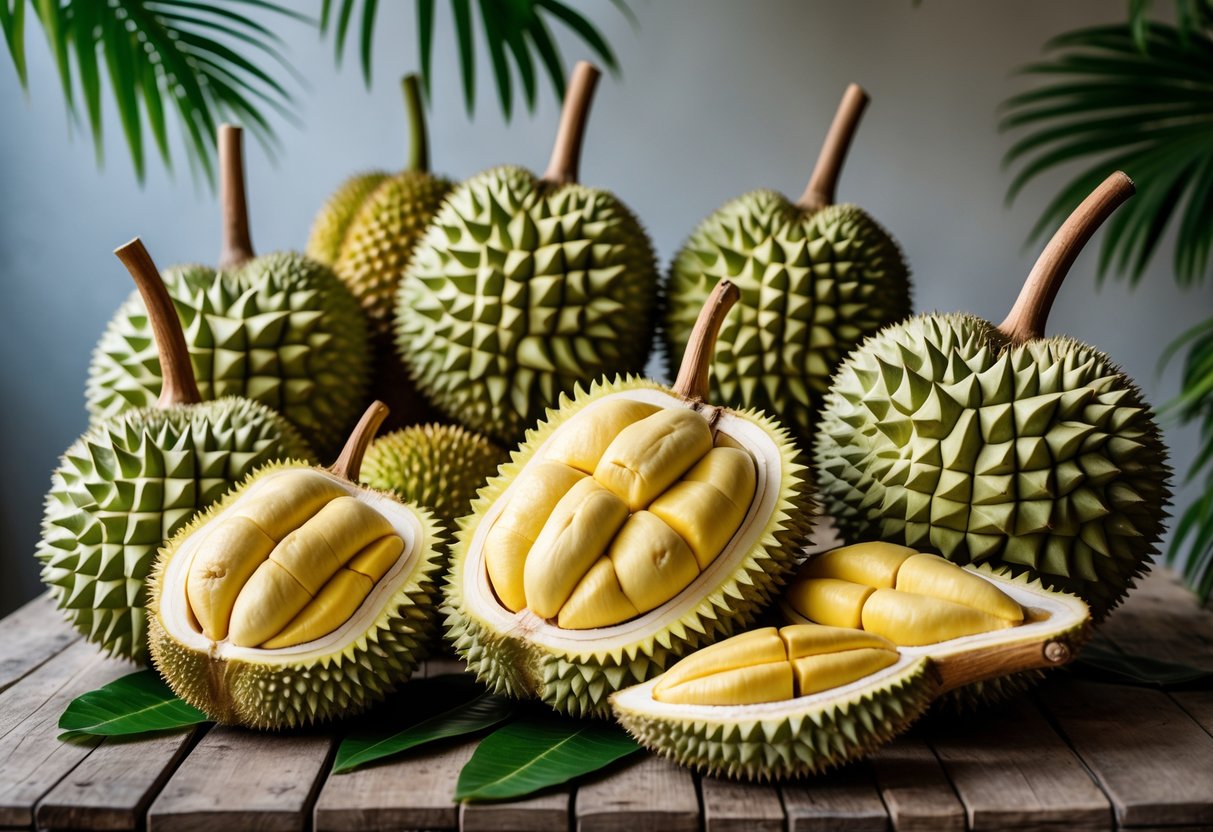
Durians really do differ a lot in taste, texture, and smell. Some hit you with bold, buttery flavors, while others are more sweet or even a little bitter.
Picking the right durian comes down to your own preferences—do you want richness, creaminess, or something with unique flavor notes? Here are some of the most popular choices you’ll spot in Singapore and Malaysia.
Mao Shan Wang and Musang King
Mao Shan Wang, also known as Musang King, has become one of the most sought-after durians out there. Its thick, bright yellow flesh feels creamy and buttery, and the flavor is bold—bittersweet and intense.
Growers in Pahang, Malaysia, produce most of the Mao Shan Wang durians. You can recognize ripe ones by their yellow-green husk, small cracks, and that unmistakable aroma.
People often pay more for Mao Shan Wang because of its rich flavor and popularity. Bakers even use its flesh in premium durian cakes.
D24 and Sultan
D24, or Sultan durian, stands out for its mild bitterness and creamy, slightly nutty taste. The flesh is usually pale yellow and not as intense as Mao Shan Wang, so it’s great for durian newbies or anyone who wants a balanced flavor.
Farmers in Johor and Negeri Sembilan grow most D24 durians. When you pick one, look for pods that feel soft but not mushy.
You’ll find D24 priced in the middle range, and it’s pretty common at local stalls. Its smooth texture and gentle taste work well for eating fresh or mixing into desserts.
Red Prawn
Red Prawn durian is all about that sweet, custard-like flavor with a hint of fermented sugar. Its reddish-orange flesh makes it easy to spot.
This sweet profile draws in families and anyone with a sweet tooth. Red Prawn comes from Penang and is perfect if you want something candy-like and less bitter.
Cooks often use Red Prawn in light pastries or mousse cakes because of its delicate sweetness. It usually costs less than Mao Shan Wang, so it’s a more budget-friendly option.
Golden Phoenix
Golden Phoenix durian is famous for its pungent aroma and slightly bitter, dry flesh. The color is a pale white-yellow, and the texture is drier than most.
You’ll mostly find Golden Phoenix from Genting Highlands. People use it in high-end durian desserts like mooncakes.
Its flavor is more intense, but it’s not as creamy as some other types. Golden Phoenix often costs a bit more because of its unique taste.
Enjoying Durian: Seasons, Delivery, and Modern Uses
Enjoying durian is really about timing, knowing where to get quality durians delivered, and being open to trying it in new ways. The freshest durians come during certain seasons, and these days, lots of sellers offer delivery for extra convenience.
You’ll also see durian popping up in all kinds of desserts and modern recipes.
Durian Season and Harvest
In Singapore, durian season usually runs from June to August and again from December to January. That’s when durians naturally fall from trees in places like Pahang, Johor, and Penang.
Harvesters only grab the durians after they fall, so you get fruit at its ripest. Look for durians with a slightly cracked husk and a strong aroma—those are signs of freshness.
Sellers typically move fresh durians within 24 to 48 hours of arrival in Singapore to keep them tasting their best. If you buy during peak season, you’re more likely to get durians with full flavor and the right texture.
Durian Delivery and Trusted Sellers
Ordering durian for delivery has become super popular. Several sellers now guarantee fresh durians delivered right to your door, sometimes even on the same day they’re harvested.
These sellers use cold-chain transport to keep fruit fresh. Some even offer vacuum-packed or flash-frozen durian for a longer shelf life.
Before you order, check prices and reviews so you don’t end up with spoiled or disappointing durians.
Durian Desserts and Culinary Innovations
People don’t just eat durian fresh anymore; it’s popping up in all sorts of desserts these days. You’ll find durian in cakes, mochi, puffs, and even mousse.
These desserts let you enjoy durian’s bold flavor without the hassle of wrestling with that spiky husk. You’ll also spot durian in mooncakes and other local sweets—it’s kind of wild how much people have started experimenting with it outside the usual fruit-eating routine.
Editor’s notes
Trust isn’t built through ads. It’s built through consistency. Delivering what you promise, every time, matters more than any promotion.