
Yellow Dragon Fruit: Taste, Nutrition, and Health Benefits
Yellow dragon fruit stands out as a unique tropical fruit with bright yellow skin and sweet white flesh dotted with tiny edible seeds. It’s low in calories, but you get a surprising punch of vitamin C, fiber, antioxidants, and minerals that help your immune system, digestion, heart, and skin.
The mild sweetness and vibrant look definitely make it a fun, healthy addition to your meals.
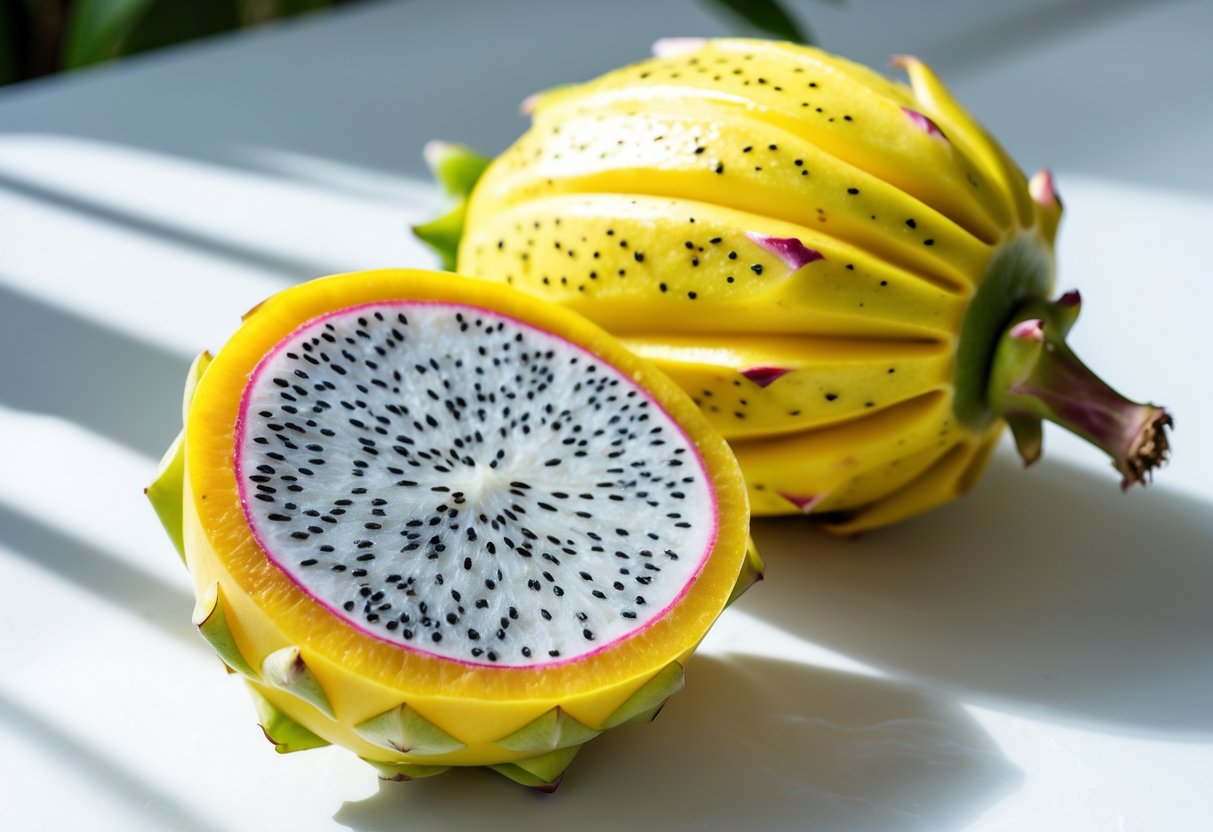
Maybe you know dragon fruit from the red or pink varieties, but the yellow kind? It’s sweeter and just as healthy. Growers raise it on a climbing cactus that’s native to South America, but now you’ll find it in warm places all over the world.
If you want to boost hydration, help your gut, or just shake up your fruit routine, yellow dragon fruit could be a good pick.
What Is Yellow Dragon Fruit?
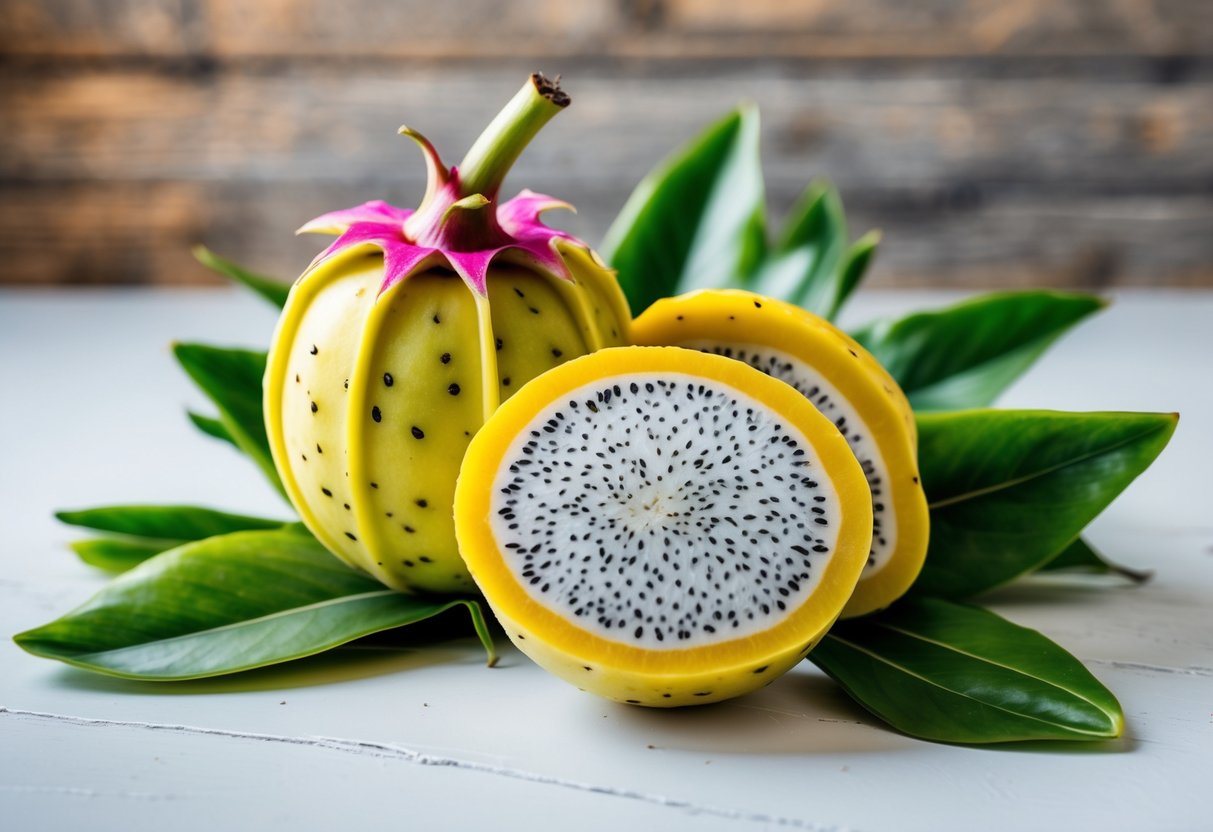
Yellow dragon fruit is a tropical fruit that really pops with its bright skin, sweet taste, and crunchy seeds. It grows from a climbing cactus and stands out for its nutritional value and distinct flavor.
Let’s get into where it comes from, what it tastes like, and how it’s different from other dragon fruits.
Botanical Origins and Varieties
People call yellow dragon fruit Hylocereus megalanthus, and it belongs to the cactus family. It originally comes from Central and South America.
Yellow dragon fruit isn’t as common as the red or pink ones, but fans love its sweetness and nutrition. Farmers in Mexico, Colombia, parts of Asia, and the U.S. now grow it.
Appearance and Flavor Profile
You’ll spot yellow dragon fruit by its bright yellow skin, covered in little knobby spikes. The skin is thick and honestly, you don’t want to eat it.
Inside, you get soft white flesh with tons of tiny, crunchy black seeds. They add a nice texture.
The flavor? It’s sweet, with a little tang and some floral notes. People often say it tastes more intense and sweeter than other dragon fruits—think pear or kiwi, but different.
The texture is crisp and juicy, so it’s great fresh or tossed into salads and smoothies.
Key Differences from Other Dragon Fruit
Yellow dragon fruit stands apart from pink or red dragon fruit because of its color, taste, and size. The yellow peel is a giveaway.
It’s usually smaller than the more common types, but it packs a sweeter and less acidic punch.
The flesh is denser and not as watery as some other dragon fruits. The aroma comes off stronger and sweeter too.
People often pick yellow pitaya for eating fresh, juicing, or even desserts.
| Feature | Yellow Dragon Fruit | Red/White Dragon Fruit |
|---|---|---|
| Skin Color | Bright Yellow | Pink |
| Flesh Color | White with black seeds | White or Red with black seeds |
| Flavor | Sweeter, mildly tangy | Mild to slightly sour |
| Size | Usually smaller | Larger |
| Texture | Dense, juicy, crisp | Softer, more watery |
Yellow Dragon Fruit Health Benefits and Usage
Yellow dragon fruit gives you a mix of vitamins, fiber, and antioxidants that help your body in several ways. It supports digestion, can improve your skin and heart, and you can enjoy it in all sorts of dishes.
Nutritional Value and Key Compounds
Yellow dragon fruit doesn’t have many calories, but it’s loaded with nutrients. You get a good dose of vitamin C for your immune system and cell protection.
It also contains antioxidants like beta-carotene and betalains, which protect your body from damage by free radicals.
There’s plenty of dietary fiber too, which is great for digestion. You’ll also find minerals like calcium, iron, and phosphorus to help your bones and blood.
The fruit’s sweetness comes from natural sugars, so it makes a tasty healthy snack.
Digestive Health and Prebiotics
All that fiber in yellow dragon fruit helps keep your bowel movements regular. The fiber acts as a natural laxative, which can help if you’re feeling a bit blocked up.
The seeds do their part too, helping to clean your intestines. They provide prebiotics that feed the good bacteria in your gut.
Heart and Skin Health
If you eat yellow dragon fruit, you might help your heart by lowering bad cholesterol. The antioxidants and vitamin C team up to boost blood flow and protect your arteries.
Your skin can benefit as well. Vitamin C helps your body make collagen, which keeps skin firm and clear.
The antioxidants fight inflammation and can reduce wrinkles or other signs of aging. Eating yellow dragon fruit often might give your skin a natural glow and help its overall health.
How to Eat and Enjoy Yellow Dragon Fruit
Cut a yellow dragon fruit in half and scoop out the flesh with a spoon. Honestly, it tastes great just like that—fresh and simple.
I like to toss some into yogurt or a smoothie. It gives fruit salads a nice pop of color and sweetness too.
If you’re feeling adventurous, blend it with banana and spinach for a breakfast smoothie bowl. Or try mixing it with mango and pineapple for a tropical salad that’s hard to resist.
Want something cooler? Puree the fruit and freeze it into sorbets or popsicles. Just don’t go overboard—start with small portions, especially if your stomach’s on the sensitive side.
Editor’s notes
Children are honest. If a fruit isn’t good, they won’t eat it. We’ve had parents tell us their kids suddenly ask for fruits by name. That’s when we know we’re doing something right. Kids don’t care about branding — only taste.