
Types of Durian: A Guide to Popular Varieties and Flavours
Durian, which many call the king of fruits, has a reputation for its strong smell and unusual taste.
You might assume all durians taste the same, but honestly, there’s a surprising range—each with its own flavor, texture, and even color.
Learning about these different types can help you discover the one that actually fits your taste buds.
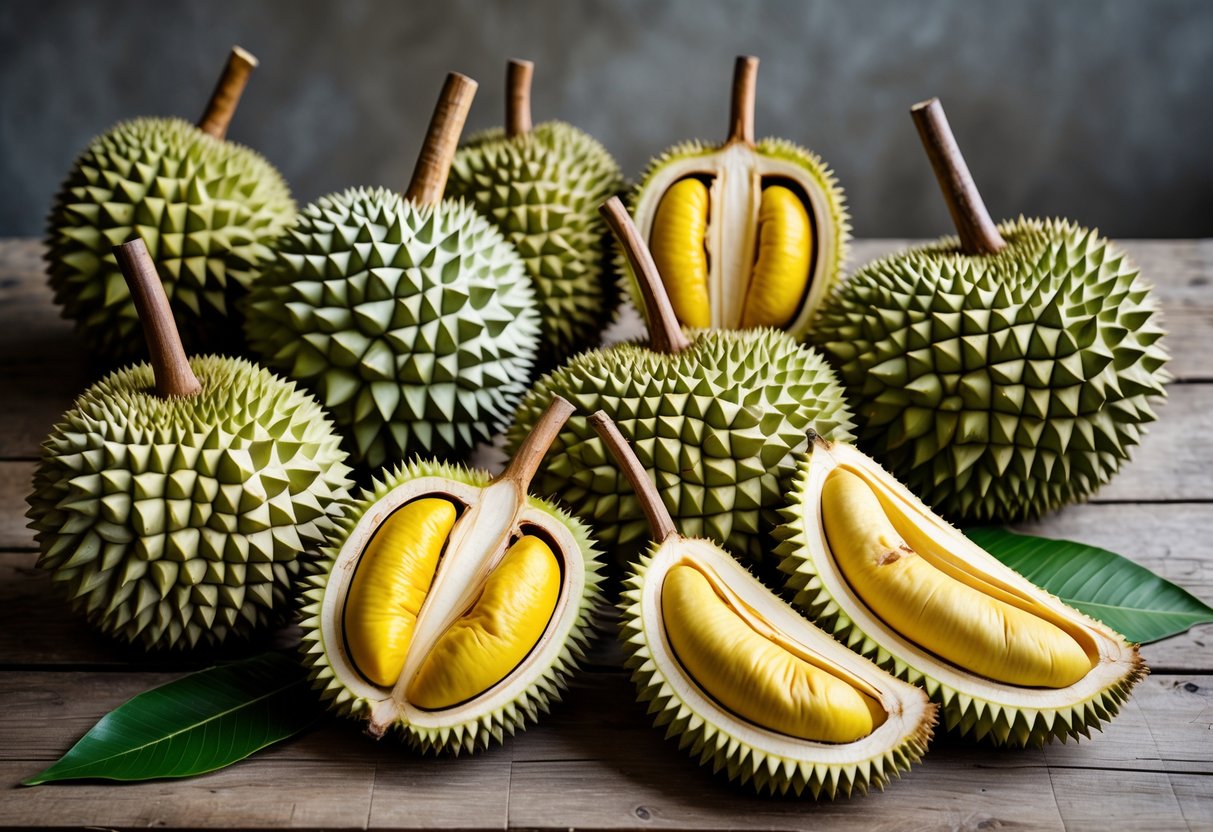
The main types of durian differ by sweetness, bitterness, creaminess, and even the color of their flesh, which can go from pale yellow to deep orange or red.
Some favorites? Mao Shan Wang stands out for its creamy, bittersweet punch, while Red Prawn durian leans sweet and custardy.
If you’re curious about durian, you’ll find options for newbies and hardcore fans.
Whether you want something mild or a flavor that hits hard, knowing your durian types lets you enjoy this fruit your way.
Popular Types of Durian
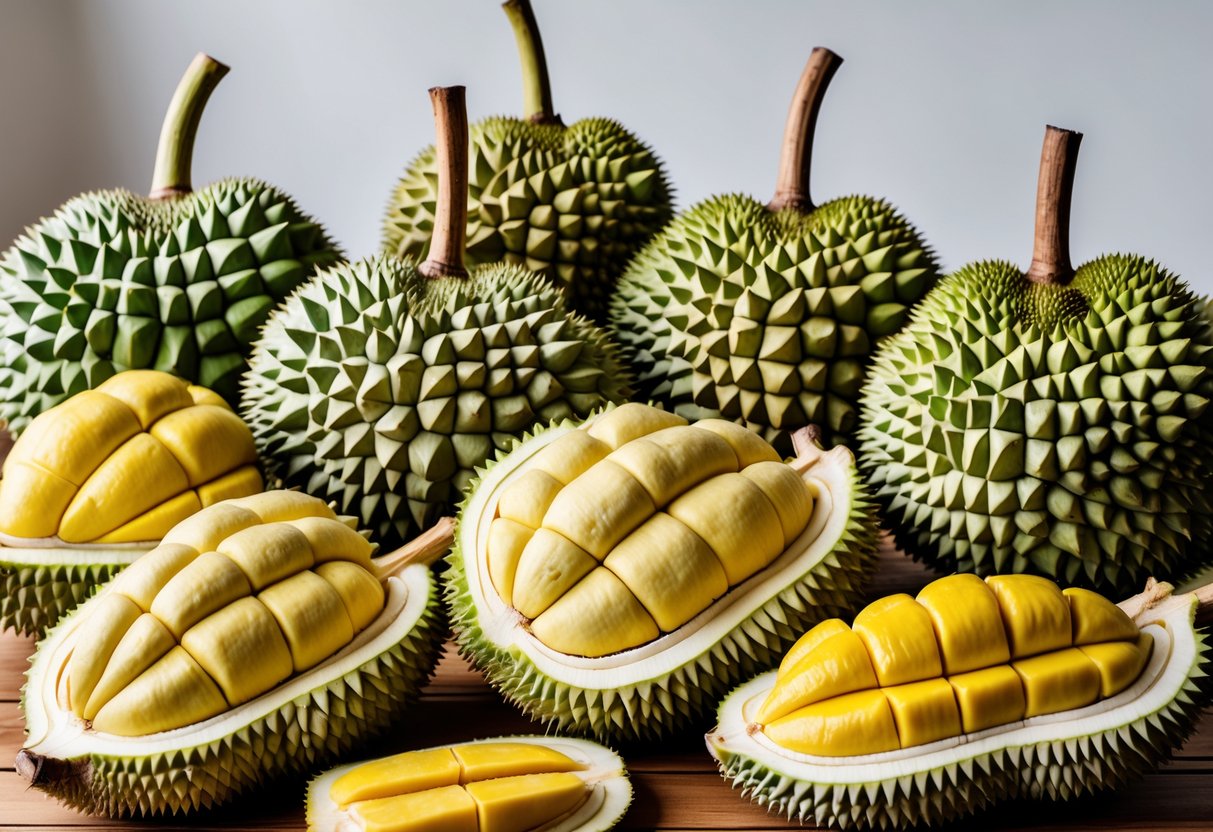
When you’re picking out fresh durians, you’ll quickly spot varieties that stand out for their distinct flavors and textures.
Every type brings something different—some are creamy, others are sharp and bitter.
If you know what to expect, you can pick a durian that actually matches what you’re craving.
Mao Shan Wang (Musang King)
People rave about Mao Shan Wang, or Musang King, and honestly, it’s easy to see why.
This variety delivers a bittersweet taste and a smooth, custardy texture.
Its flesh looks thick and creamy, and the rich aroma draws in durian fans every time.
You’ll spot its bright yellow color right away.
Bakers and dessert shops love it for ice cream and pastries because of that strong, unmistakable flavor.
Farmers mostly grow it in Pahang, Malaysia.
Even though you can find it pretty widely, it still counts as premium—probably because it’s so consistently good.
D24 (Sultan)
D24, sometimes called Sultan, gets attention for balancing sweet and bitter.
Its flesh is pale yellow, smooth, and creamy—less intense than Musang King, so it’s a safe pick if you’re just starting out.
Growers in Malaysia, especially Pahang, harvest plenty of D24.
A lot of people like its mild alcoholic notes.
Because it appeals to so many tastes, you’ll often see it at durian parties.
Red Prawn (Hong Xia)
Red Prawn stands out with its bright orange flesh.
It feels creamy and dense, and the taste is mostly sweet with just a hint of bitterness.
That unusual color and rich flavor make it a favorite for those who like their durian on the sweeter side but want a little complexity.
Farmers in Penang, Malaysia, grow most of the Red Prawn you’ll find.
If you catch a whiff of a strong aroma, that usually means the fruit’s nice and ripe.
Golden Phoenix (Jin Feng)
Golden Phoenix, or Jin Feng, goes in a totally different direction—it’s sharper and more bitter.
The flesh is pale and a bit watery, not as creamy as others.
You’ll notice the pungency, which gives this durian its bold personality.
If you’re not into super sweet durians, you might actually enjoy Golden Phoenix.
It’s not as common, but growers in Johor, Malaysia, produce most of what’s available.
That distinct bitterness? It’s definitely an acquired taste.
Black Thorn
Black Thorn is rare and, wow, people really prize it.
It packs a punch with intense, bitter flesh, a custardy feel, and a deep orange-red color.
Fans say the flavor is even stronger than most other types, so it’s for folks who want a serious durian experience.
You’ll mostly find Black Thorn in Penang.
It usually costs more, thanks to its rarity and quality.
When fresh, the aroma is strong but not overwhelming.
If you want a durian that leaves an impression, Black Thorn is a bold pick.
Selecting, Enjoying, and Buying Durian
You can eat durian fresh or in desserts, but knowing when to buy, how to pick a good one, and how to store it can make a big difference.
Your choices depend on the season, how fresh the fruit is, and whether you like to pick durian yourself or just have it delivered.
Durian Season and Availability
Durian season usually comes in two main waves: June to August and December to January.
That’s when the fruits drop naturally and reach their best flavor.
Most fresh durians come from Malaysia, especially places like Pahang, Johor, and Penang.
Because durian spoils so fast, sellers rush to get it to you within a day or two after harvest.
If you know the season, you can grab better quality and sometimes even better prices.
Outside those months, you might get frozen or preserved durians instead, which—let’s be honest—just aren’t the same.
How to Choose Fresh Durian
Fresh durian should have a strong but pleasant smell.
If it smells sour or weird, it’s probably overripe or spoiled.
Look for small cracks on the husk, and make sure the spikes aren’t dried out or blackened.
Try the shake test: gently shake the durian and see if the flesh moves inside.
That usually means it’s ripe but not too soft.
Check the stem—it should look green and moist.
A dried stem means the durian’s past its prime.
Also, if the fruit feels heavy in your hands, that’s a good sign there’s plenty of flesh inside.
Durian Delivery and Storage
Durian delivery makes life easier if you don’t feel like heading to the market.
Sellers often vacuum-pack or freeze the pulp to lock in the flavor.
Once you’ve got your durian, put it in the fridge if you’ll eat it soon.
For longer storage, freezing works best.
Just remember, the smell is strong—store it in airtight containers if you don’t want the rest of your fridge to smell like durian.
Durian in Singapore
Singaporeans go a little wild for durian when the season hits. You’ll see varieties like Mao Shan Wang, D24, and Red Prawn popping up everywhere, each with its own thing—some are bittersweet, others just creamy and sweet.
Trusted sellers set up their stalls or offer delivery, so you can grab durians however you like. Honestly, it’s kind of fun to try both the fresh fruit and all those desserts—cakes, mooncakes, you name it.
Brands such as The Durian Bakery have really pushed durian delivery into the spotlight, especially for celebrations or gifts.
If you know which sellers to trust, you’ll dodge the disappointing stuff and actually get your money’s worth.
Editor’s notes
Fruit teaches you about timing. Pick too early, it lacks flavour. Too late, it spoils. Running eFreshFruit.com has made us more patient people. Timing matters in business, health, and life.